
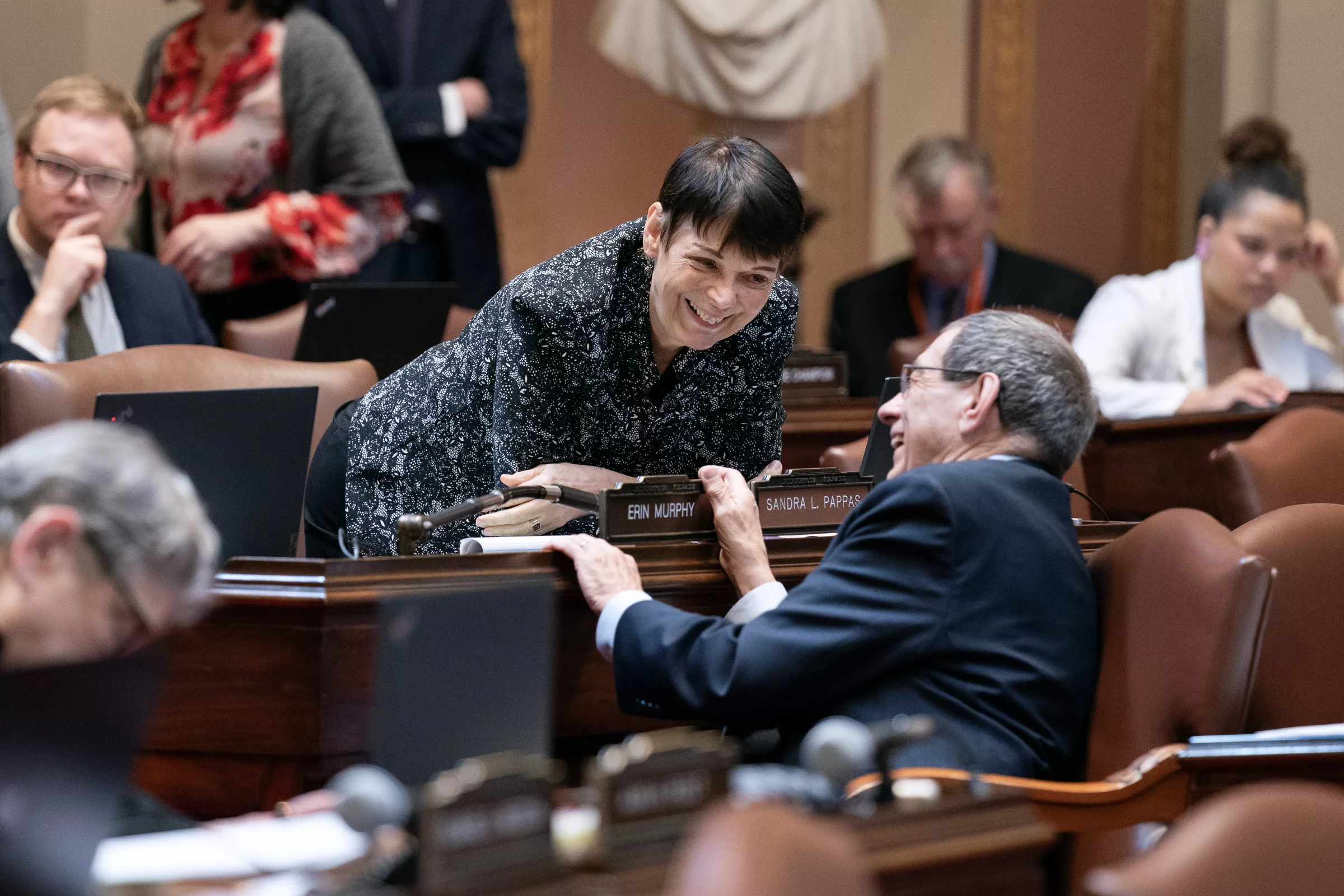
For more than four decades, Senator Sandy Pappas helped shape both Minnesota policy and the physical landscape of St. Paul — from women’s workplace protections and public education to riverfront redevelopment and neighborhood investment.
Now, after 42 years in the Minnesota Legislature, the longtime DFL lawmaker is preparing to step away at the end of the 2026 legislative session, closing one of the longest tenures in Minnesota political history.
“It’s been the privilege of a lifetime to advocate for each of you,” Pappas said in announcing her retirement earlier this year.
Pappas, who first won election to the Minnesota House in 1984 before moving to the Senate in 1990, ranks among the longest-serving legislators in state history. According to the Minnesota Legislative Reference Library, she has served more than 15,000 days in office — placing her behind only a handful of lawmakers, including longtime Minneapolis legislator Lyndon Carlson and former Rep. Mary Murphy of Hermantown.
Her career traces not only the evolution of Minnesota politics, but also decades of social movements that shaped her worldview.
“I sort of view my life as a series of social justice movements,” Pappas said during a recent interview.
Born in Hibbing and raised in the Twin Cities, Pappas said politics and activism were present early in her life. Her parents supported Adlai Stevenson, and her great-aunt Elsie ran for mayor of Columbia Heights in the 1950s.
“There’s women’s leadership,” she said.
She recalled being deeply affected by the assassination of President John F. Kennedy at age 13 and inspired by the words, “Ask not what your country can do for you, but what you can do for your country.”
From there came involvement in anti-war demonstrations, the women’s movement and community organizing.
“In Minneapolis, I was involved with the Twin Cities Women’s Union and a feminist theater,” she said. “So I became interested in the women’s movement.”
After moving to St. Paul’s West 7th neighborhood in the 1970s with her husband, Neal Gosman, Pappas became immersed in neighborhood activism. The couple worked with the early years of the “Community Reporter” newspaper and neighborhood planning organizations while raising their children.
“We had a job share,” Pappas said. “He was part-time parent. I was a part-time parent while the other one worked. It was very unusual back then to do that.”
At the same time, she worked in the arts through COMPAS and the Fort Road Arts Committee, organizing arts parades, puppetry programs and community theater projects.
“We did puppetry with kids,” she said. “I wrote a play that was in the ‘Community Reporter.’”
Her entry into electoral politics came almost accidentally.
After being laid off from her arts organizing job while pregnant with her third child, Pappas said her husband suggested she run for the Legislature.
“My husband said to me, ‘Well, you don’t have anything to do for the next few months, right? Why don’t you run for the legislature?’” she recalled with a laugh.
She lost her first attempt in 1982 after failing to secure the DFL endorsement, but spent the next two years preparing for another campaign by interning at the Capitol and St. Paul City Hall while completing coursework at Metropolitan State University.
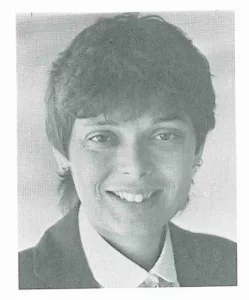
When she ran again in 1984, she won the DFL endorsement on the 10th ballot and narrowly captured the primary by 54 votes.
“That’s my closest race,” she said.
Over the next four decades, Pappas became one of the Senate’s leading negotiators and policy architects, eventually serving as Senate president from 2013 through 2017 and chairing the powerful Capital Investment Committee.
She points to Minnesota’s recent bonding packages as among her proudest accomplishments.
“To get $4 billion in infrastructure for the state of Minnesota over four years, passed three bonding bills out of four years — that’s probably my biggest accomplishment,” Pappas said.
Bonding bills, which fund infrastructure projects statewide, often require delicate negotiations between parties, chambers and regional interests.
“It’s a very big puzzle to put it all together,” she said. “You have to have really good relationships with the House and with Republicans. That’s something I’ve worked really hard at.”
Those negotiations helped fund projects across St. Paul over the years, including improvements to Harriet Island, Raspberry Island, Union Depot, the Mississippi riverfront and the reconstruction of the Third Street bridge connecting downtown and the East Side.
Pappas also helped secure funding for cultural institutions including the Victoria Theater Arts Center, Wakan Tipi Center and the Minnesota Children’s Museum, while supporting transit-oriented development tied to the Green Line corridor and Allianz Field.
But she said some of her proudest work came through labor and women’s rights legislation.
In 2013, Pappas authored the Women’s Economic Security Act, which laid groundwork for later policies including earned sick and safe time, paid family leave and Minnesota’s Secure Choice retirement program.
“I kind of started the whole process,” she said. “eventually every employer will have to offer a retirement plan”
She described the legislation as incremental work that took years to build.
“That’s so much of what happens,” Pappas said. “It takes years and it takes collaboration and it takes other people really caring about that issue.”
Her broader legislative legacy includes helping eliminate the statute of limitations for sexual assault cases, banning child marriage in Minnesota, supporting human trafficking protections and helping establish the Children in Need of Protection and Services program.
Despite the accomplishments, Pappas said the work often involved compromise and patience rather than ideological grandstanding.
“I call myself a pragmatic progressive because I do want to get the job done,” she said. “I do know that you have to compromise.”
Sometimes, she joked, that even means using “the mumble strategy” on the Senate floor.
“You hold the mic really close to your mouth and you go, ‘This is a really great bill, I just hope you all vote for it,’ and you sit down,” she said.
Pappas said her Jewish faith, community activism and decades in St. Paul neighborhoods shaped her approach to public service.
“When I moved to West 7th is kind of the final step when I became a community activist,” she said. “When I understood the importance of community.”
Even after decades in office, she said legislators must remember who they ultimately serve.
“Don’t forget your boss,” Pappas said. “It’s your district.”
As retirement approaches, Pappas said she hopes younger generations interested in politics understand that effective leadership requires both passion and collaboration.
“Find something you’re passionate about and demonstrate leadership,” she said. “Be open to other ideas and opinions.”
And despite today’s political divisions, she still believes relationships matter.
“Sometimes the people in the legislature who are really, really far right and do horrible things on social media can be perfectly nice to talk to,” she said. “Making those friendships — because you’re not always going to be in charge.”
Before leaving office, Pappas plans to continue community work, including a scholarship fund at Metropolitan State University tied to her retirement celebration later this year.
“It’s kind of a legacy,” she said.
While her time serving St. Paul in the legislature is coming to an end, she is still representing her boss, the people of her district, until they pick her successor this November..
“I still am, till the end of the year, a legislator.”
Selected Legislative Accomplishments
- Authored the 2013 Women’s Economic Security Act
- Helped establish statewide earned sick and safe time
- Led passage of major state bonding and infrastructure packages
- Supported creation of Minnesota’s Secure Choice retirement program
- Helped eliminate the statute of limitations for sexual assault cases
- Supported Minnesota’s ban on child marriage
- Advocated for the Minnesota DREAM Act
- Helped secure funding for Union Depot, Harriet Island and riverfront redevelopment projects
- Served as president of the Minnesota Senate from 2013-2017
- Advocated for labor protections, public education and neighborhood redevelopment in St. Paul






Leave a Reply