
When Kaohly Her took office in January as the first woman and first Hmong American elected mayor of St. Paul, she expected to spend her opening months focused on improving city operations, streamlining development and advancing economic growth.
Instead, within days of her election, her administration was thrust into crisis management as federal immigration enforcement actions intensified across the city under what became known as Operation Metro Surge.
“I think that there was a part of me that maybe was already a little bit prepared because I knew what had been happening,” Her said during a recent interview marking her first six months in office.
Her defeated incumbent Mayor, and her former boss, Melvin Carter in a November 2025 upset victory and was sworn in Jan. 2. Her campaign centered on what she called three core priorities: safe communities, a vibrant economy and affordable housing. She also pledged to defend immigrant and LGBTQ+ residents from federal policies she described as hostile.
Born in Laos and raised in the United States after arriving as a Hmong refugee, Her’s election was widely viewed as historic for both St. Paul and Minnesota’s large Hmong community. Before becoming mayor, she served in the first years of the Carter administration before winning election to the Minnesota House in 2018, becoming one of the first of two Hmong American women elected to the Legislature and later the first Hmong American woman to serve in House leadership.
“That was three days into my administration.”
Her said concerns over immigration enforcement had already become central to her campaign before the surge reached public attention.
“When I said that immigration was an important platform issue for me, lots of people actually said to me, ‘We don’t think that you should include that because that’s a federal issue. That’s not a local issue,’” Her said.
While serving in the Legislature, Her said she began hearing from immigrant families months before the mayoral election about increased immigration enforcement activity.
“I had my first meeting with ICE representatives in April,” she said. “We were already seeing targeting of specific communities.”
She described accompanying residents to immigration check-ins during the summer and hearing increasingly fearful stories from community members.
“I remembered by early July, families who I was going with called me and said, ‘You don’t need to go anymore,’” Her said. “And I said, ‘Why?’ And they said, ‘We’re just going to hide our person for the next three years.’”
Her said reports of enforcement activity particularly affected Latino and Southeast Asian communities, including Hmong residents in Frogtown and Midway.
“The Hmong community had told me that there were weekends where they were heavily targeted in the Frogtown and in Midway neighborhoods,” she said.
Federal immigration enforcement escalated during Her’s transition into office, coinciding with violent incidents and protests that consumed the opening weeks of her administration.
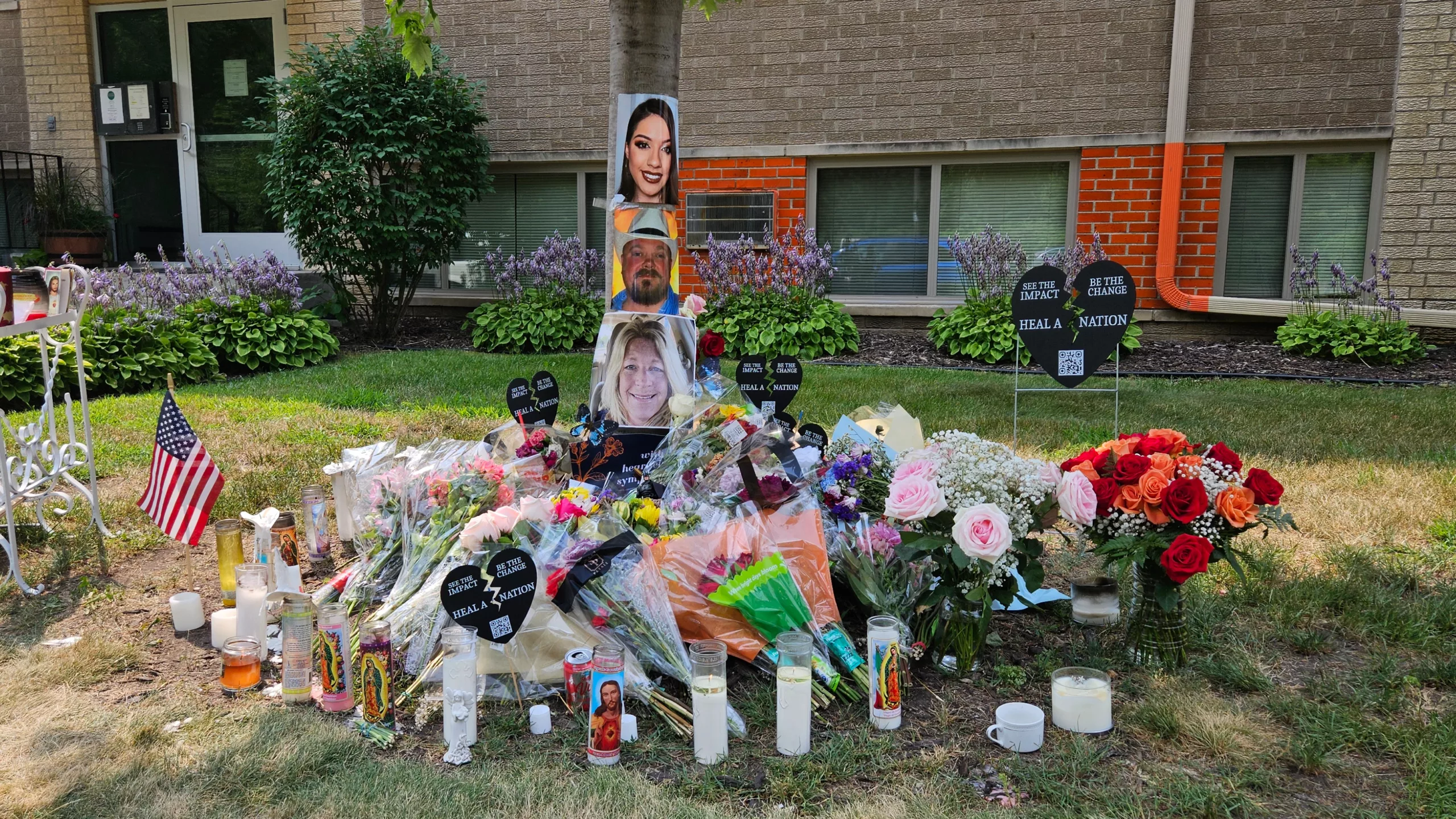
“When everything started, culminating in the killing of Renee Good and Alex Peretti, that was three days into my administration,” Her said.
Moving Forward While in a Crisis
Despite the strain of the crisis, Her said her administration continued advancing other priorities by restructuring the mayor’s office rather than replacing large numbers of city staff.
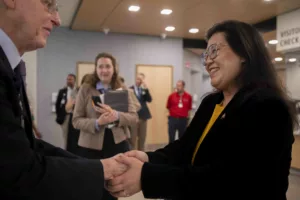
“I’m the first mayor in the history of St. Paul that changed from a mayor-deputy mayor system into a four assistant mayor,” Her said. “I didn’t grow our departments. I just didn’t hire for other positions and sort of rolled everything up into these other positions.”
Unlike many incoming administrations, Her also chose not to immediately replace department directors.
“Usually mayors appoint all new people in the beginning,” she said. “Having that continuity, wanting to do that assessment, to say, ‘Why haven’t things been working well? Is it the people or the structure that is making it difficult?’”
Her credited longtime city employees and her assistant mayors with allowing projects to continue moving while she focused on the immigration-related emergency response.
“Assistant Mayor Schumacher and I were every day dealing with what was happening with ICE and with the surge,” she said. “But Assistant Mayor Nick Stumo-Langer continued to work with PED and Public Works and DSI to look at why the permitting and processing hadn’t been working.”
Spurring Development in Downtown and Beyond
Her pointed to visible development projects across the city as among the administration’s biggest accomplishments so far.
“If you drive by United Village, having those cranes up, having that CVS down,” she said. “The purchase agreement for the CVS site signed and plans going up on that.”
She also cited ongoing redevelopment work downtown and increased investor interest in the city.
“There’s been a lot of good wins from this,” Her said. “People saying that they’re bullish on St. Paul and they want to have a small presence here.”
Earlier this month, the St. Paul Downtown Alliance announced more than $1.2 billion in planned and proposed downtown investment involving partnerships among the City, Ramsey County, the St. Paul Port Authority and private developers.
Her described that collaboration as evidence that St. Paul’s redevelopment efforts depend on partnerships rather than isolated projects.
“It really is the power of coming together and building big things, one small piece at a time with each other,” she said.
Some residents have questioned whether the administration’s emphasis on downtown redevelopment risks neglecting other neighborhoods, especially as property taxes rise and residents continue demanding investment citywide.
Her rejected the idea that downtown investment comes at the expense of other parts of the city.
“The people who invest there are investing there for very specific reasons,” she said. “If they didn’t invest there, it’s not like they would say, ‘Oh, I would go to the East Side.’”
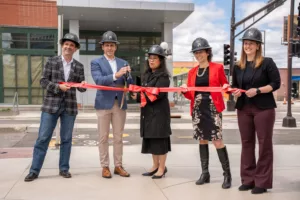
She pointed to development efforts at Highland Bridge, The Heights on the East Side and around United Village as examples of investment occurring throughout St. Paul.
“We continue to move things forward in all different areas,” Her said.
Her also argued that expanding commercial development is necessary to stabilize property taxes and support affordable housing goals.
“If our goal is building affordable housing as well, affordable housing does not add to the tax base,” she said. “I have to grow commercial and retail and all of that business because it has to be the entire portfolio of it.”
Getting the Basics Right
Rather than promising sweeping policy changes during her first year, Her said her administration’s focus remains on improving basic city operations and transparency.
“My promise to people is that I would run the city well,” she said.
That includes improving permit processing, tracking constituent complaints and eventually modernizing public works systems so residents can monitor services such as snow plowing and pothole repair in real time.
“My goal is that one day we will have a real-time tracking system where people will see where our plows are,” Her said.
She acknowledged such systems would require additional investment and potentially higher taxes but said residents are more understanding when city government communicates clearly.
“I think people are so understanding and they are so forgiving,” Her said. “So we just need to be transparent.”
Six months into a tenure shaped as much by crisis response as economic development, Her said success may not always appear dramatic.
“It’s not sexy, it’s not grand,” she said. “But it is what I promised people.”






Leave a Reply