Building on last month’s citizen helpers, religious and secular, we turn to those who were prominent in the healing profession in the West End. Historically West 7th is a main artery for healthcare in our state.
Dr. Christopher Carli (1811-1887)
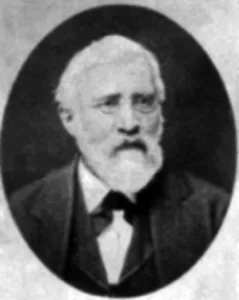
Carli received his Doctor of Medicine from Heidelberg University. In 1841 he came to the territory of Wisconsin, now the state of Minnesota as an early German immigrant and first physician in the Minnesota Territory. His practice ranged from Stillwater to Fort Snelling and Red Wing as well as the northwestern Wisconsin Territory with a largely Native and métis clientele. On one occasion he went thirty miles on skates to Red Wing to visit a patient. A Native preceded him to make sure the ice was safe.
Mother Saint John Fournier (1814-1875)
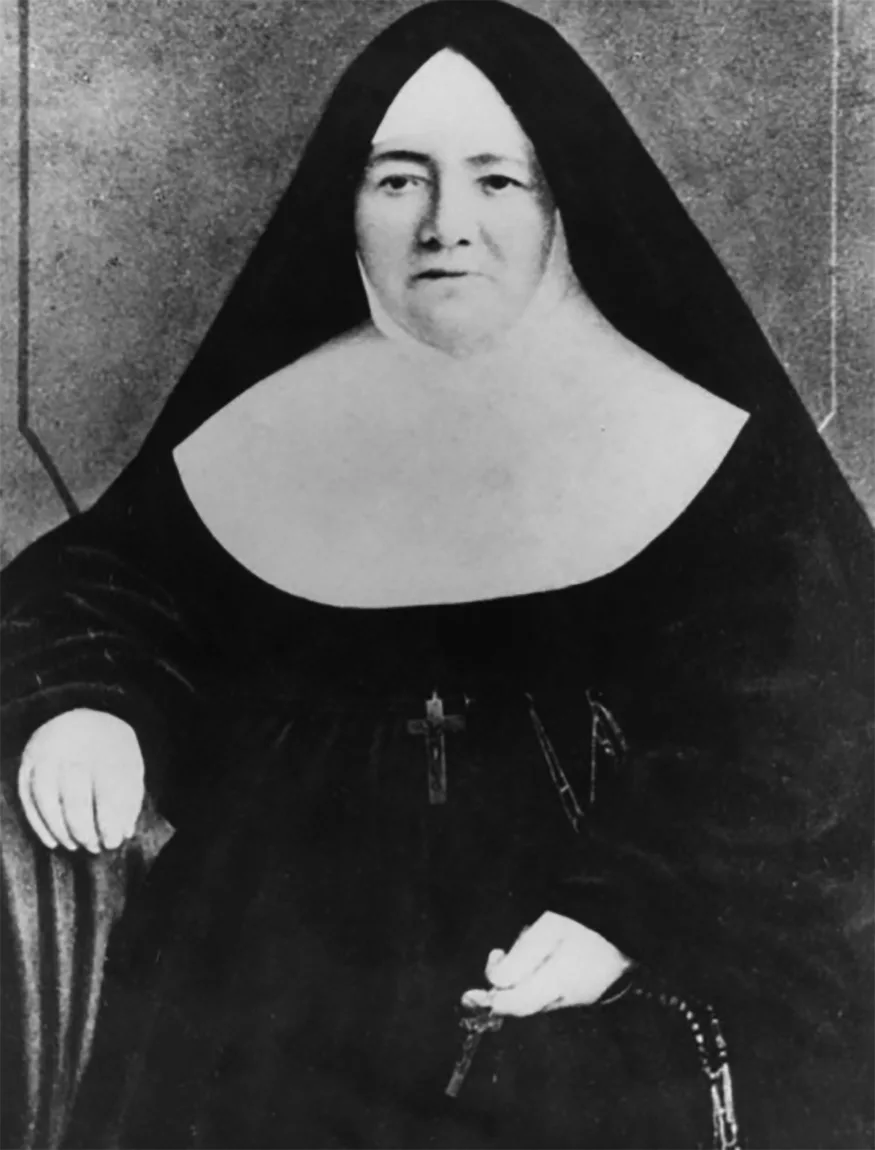
In 1851 Sister St. John Fournier (1814-1875) led two Sisters of St. Joseph of Carondelet to St. Paul. In 1853 they staffed a temporary log cabin hospital on Bench Street (below Kellogg Boulevard) in the midst of a cholera epidemic. In 1854, the sisters opened St. Joseph’s Hospital in the first stone building in St. Paul. It had private rooms, balconies, a chapel, a laundry, assembly and smoking rooms. They built a new hospital in the 1950s. It became one of the founding members of the HealthEast Care System when it was created in 1986. In 2022 both the hospital and its status as a Catholic institution ended. The sisters now run St. Mary’s Health Clinics, staffed by volunteers, serving low-income and uninsured patients. In addition, Mother Saint John pioneered education for the deaf and Black children, and nursing during the Civil War.
Ohíye S’a- Dr. Charles Alexander Eastman (1858-1939)
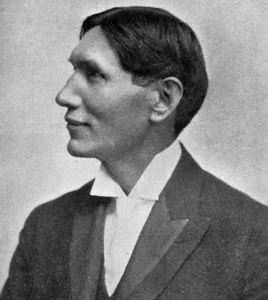
Fort Snelling Commandant, Seth Eastman’s daughter and grandson were raised in the Dakota way. His mother died shortly after his birth and he was raised by his grandmother. They fled to Canada after the Dakota uprising. After fifteen years he was reunited with his father and brothers in South Dakota, cut his hair and took the name Charles Alexander Eastman. He graduated from Dartmouth College and Boston University when he became the second Native-American physician in the U.S. Dr. Charles and his wife Elaine served several years on reservations in the Dakotas after the army massacred approximately 200 men, women and children at Wounded Knee. They relocated to St. Paul in 1893, and he became active in establishing 32 Indian groups of the Young Men’s Christian Association (YMCA). He published a memoir, “Indian Boyhood” (1902) and ten more books on Native/Dakota ethnohistory.
Dr Justus Christoph Louis Diedrich Ohage (1849-1935)
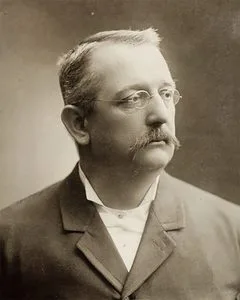
In 1871 Dr. Justus Ohage emigrated from Hanover, Germany to Missouri where he completed his medical studies. He returned to Germany but was recruited to St. Paul in 1881 by Father Clement Staub, pastor of Assumption Church. They worked together to promote the city’s general health. Ohage was an innovative surgeon (he did the area’s first gall bladder surgery), a professor at the University of Minnesota, and St. Paul’s first public health officer (1899–1918). He initiated compulsory vaccination, pure food laws, and trash disposal. In 1900 he donated Harriet Island for a public recreational area. By 1919 the river and beach became so polluted the park had to close.
Doctor Walter Reeve Ramsey (1872-1973)
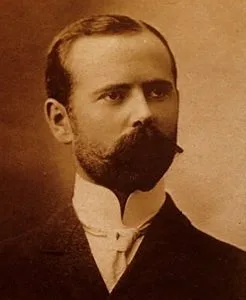
From his experience serving in France during World War I, Doctor Walter Reeve Ramsey created “A hospital to fit the child instead of molding a child to fit the hospital.” In 1928, Children’s Minnesota moved from its temporary location on the corner of Smith and Walnut with 16 beds, then to 311 Pleasant Avenue (converted to condominiums in 1979), finally at its current location at Smith and Grand Avenue. Dr. Ramsey wrote a regular column for The Farmer’s Wife magazine for many years to educate parents around the country about issues relating to children’s health. He died at age 101; buried in Oakland Cemetery.
Dr. Arthur B. Ancker (1851-1923)
In 1851 Arthur B. Ancker was born of Jewish parents in Baltimore, Maryland, graduated at the Medical College of Ohio and settled in St. Paul in 1882. In 1883 he became superintendent and physician/surgeon-in-charge of the St. Paul City and County Hospital. He served for 40 years (1883 to 1923). At the outset water came from a well; kerosene lamps supplied light. Attendants divided their time between cooking, cleaning, washing and nursing. Operations were performed behind a screen. The cellar served as a morgue. The main hospital building was developed 400 feet long with large wings. All buildings had commanding views of the Mississippi River and its bluffs, and were connected by underground passages. He lived his work, first in an apartment in the nursing building, then in a residence on the grounds.
His accomplishments were many: In 1891 he co-founded its School of Nursing (My two aunts graduated from there; my sister was in the last graduating class). He established strict sanitary and public health practices including a specialized, triple-brick-wall contagion building to contain deadly outbreaks of smallpox, scarlet fever, and diphtheria. He was president of the Ramsey County Medical Society (1894) and the American Hospital Association (1918). He was the first Professor of Hygiene at the medical school of the University of Minnesota (1888).
When he died he was buried with Masonic ritual (3rd Degree) in Frontenac at a site he particularly loved and chose; the hospital was renamed in his honor. The Ancker campus was demolished in 1967 and replaced by the headquarters of the St. Paul School System at 360 Colborne Street. Regions Hospital is its successor.
Dr. Tim Rumsey (1948)-
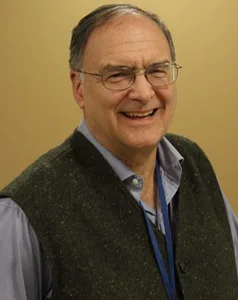
There is not much we can add to Dr. Tim’s biography that hasn’t been added through the pages of our Community Reporter, most recently June 27, 2026 “50 Years in West 7th, the Conclusion.” Of course the underprivileged and citizens of St. Paul have benefitted not only from his professional care but also from his engagement as a neighbor and author.
Born and raised in “southern Highland Park” by Sibley Plaza, Tim spent many growing up years near or in the West 7th neighborhood. He attended college at St. Thomas and medical school at the University of Minnesota. His career from 1975 to 2020 was spent at Helping Hand Health Center and United Family Practice in West 7th.
So if you see him on the streets, walking as he does, shake his hand and say thank you for continuing the tradition of being at the heart of health care in our community through the centuries.
You can find a copy of “The Origin Story of Fort Road/West Seventh Street, the Township/City of Saint Paul, the Territory/State of Minnesota: Glacial Age Forward” at your local library, or order up a copy of your own at fortroadfed.org. Learn more about the book and find Joe’s upcoming conversations about the history of West 7th at josfland.com.






Leave a Reply