
By Sana Zekri, MD
Today, advertisements for medications like tirzepatide (tradename Mounjaro/Zepbound) and semaglutide (tradename Ozempic/Wegovy) are everywhere. They seem to have suddenly appeared and taken the world by storm. Where did they come from, and what are the risks and benefits of using these medications?
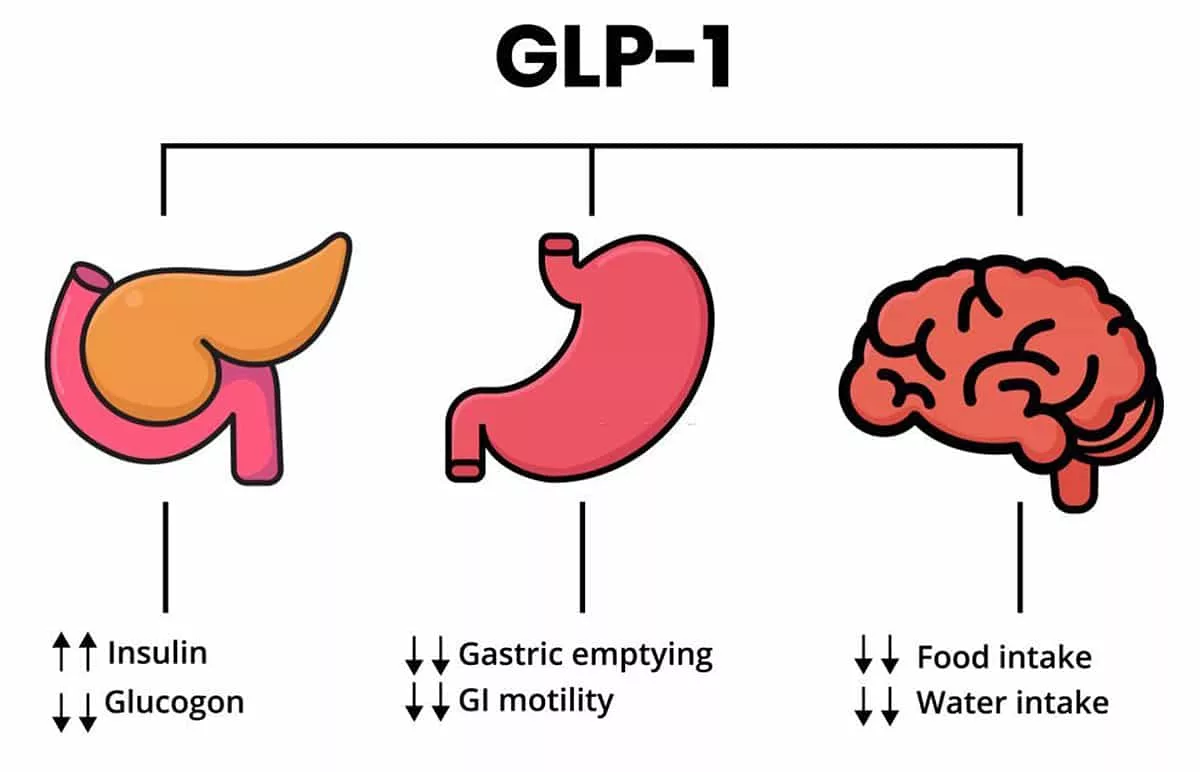
Glucagon-like-peptide 1 receptor agonists (GLP-1 RAs) are medications that have been found to mimic a hormone in the body known as GLP-1 that is released when we eat food. GLP-1 has been found to help with regulation of blood sugar, feelings of fullness and how quickly foods move through the gut. A GLP-1 mimicker was found in the 1990s in the venom of the gila monster. Purification of that venom component was used to create the first GLP-1 RA drug, known as exenatide (tradename: Byetta). Using Byetta was annoying and expensive, though, so research was undertaken to find better GLP-1 RAs.
The next advance was in 2010 with the release of liraglutide (tradename: Victoza). Victoza was used as a treatment for diabetes, but reports of people losing significant weight also started to come in. Soon, liraglutide was also approved just for weight loss under the tradename Saxenda. Since then, semaglutide and tirzepatide have been approved for diabetes and weight loss.
As expected, these medications have been extremely popular. Weight loss has been a fixture of American magazine advertisements since the early 1900s. Time and experience has shown; however, that most of these remedies were snake oil or had unacceptably high risks. How ironic that the first medicines that have shown strong success in weight loss with relative safety are based off of the venom of a lizard!
Still, every medicine has a balance of risks and benefits. So what are we looking at with these GLP-1 RAs?
Diabetes, especially when it is poorly controlled, increases risks of heart attacks and strokes. GLP-1 RAs, more than just controlling blood sugar, also seem to independently reduce the risks of heart attacks and strokes in people with diabetes. They also frequently help people reduce or eliminate doses of insulin.
What about people who are only taking these medications for weight loss? Here the benefits are probably less. The best benefits are in people who have liver inflammation, high blood pressure and sleep apnea contributed to weight.
What about risks? First and foremost is the expected side-effect profile of GLP-1 RAs. They frequently cause nausea, vomiting, abdominal pain and bowel issues. These tend to get better as the body adapts to the effect of the medicine, but can be very annoying, and may lead to unneeded workup. GLP1-RAs can rarely cause pancreas inflammation which can land a person in the hospital and can even lead to death. There is also a risk of cancer of the thyroid and pancreas – though only in people who have a strong family history of thyroid or pancreas cancer.
What gets less press, though, are the downsides of major weight loss. People who lose weight with GLP-1 RAs lose both fat and muscle. Heavier weight and more muscle, especially in the elderly, tends to help with bone strength. Losing weight may weaken the bones and increase risk of fractures.
So what can we take away from this? GLP-1 RAs can be very useful in the right circumstances. People with diabetes and people using them for weight loss with certain weight-induced medical problems benefit most. It can be attractive to use these medications to ‘shed some weight’, but we should keep in mind that it isn’t a risk-free endeavor, particularly as we age.
Dr. Zekri is a family physician at Allina Health United Family Physicians, 233 Grand Ave, St. Paul, MN 55102, 651-241-5200.







Leave a Reply